
How to Find the Perfect Cut
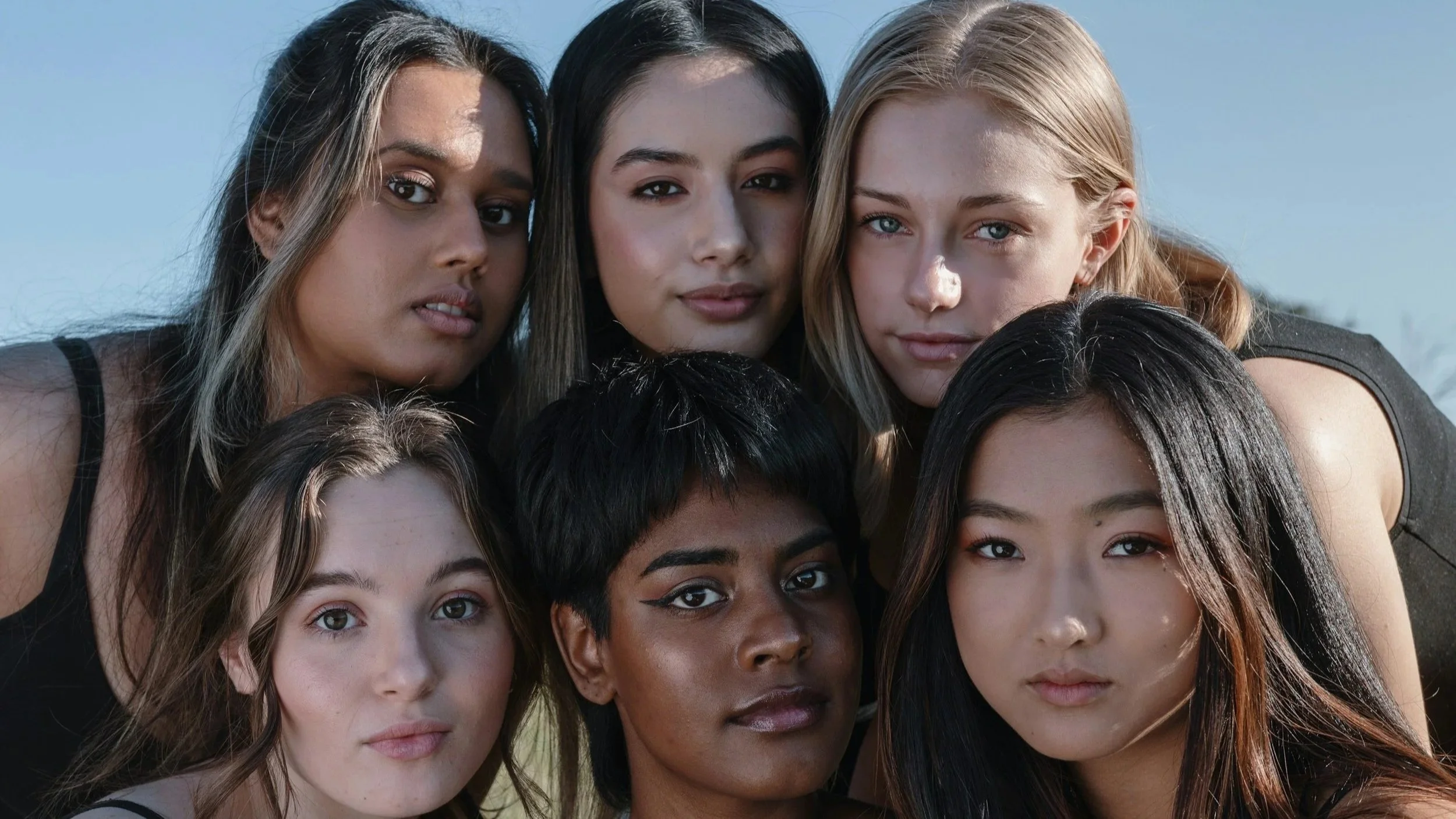
Have you ever walked out of the salon with a haircut you found on Pinterest that feels completely wrong on you? The culprit is rarely the hair itself, it’s how the cut interacts with your unique facial geometry. Hair styling is an art of proportions. By pairing the right cut with your specific face shape, you can highlight your best features, soften sharp angles, or add illusionary length and width where needed.
Now, it's not a requirement to pick a cut that perfectly flatters your face shape. Anyone can make any cut work with the right style and confidence. But, if you find yourself consistently disappointed by the cuts you receive and feel like they just aren’t working, chances are, your cut might not be the right one for your face. But how does one make the right cut decision for your face shape?
Step 1: Determine Your Face Shape
Everyone's face is unique, no two alike. There are, however, broad categories that most people’s face shape falls into. They are round, square, oval, heart, diamond and rectangle.
Round faces have an equal length and width ratio with soft features and a rounded jawline. Square faces are categorized by a forehead, jaw and cheekbones of equal width, accompanied by a sharp, angular jawline. Oval faces are greater in length than the width, with cheekbones being the widest part and a soft, curved jaw. Heart shaped faces have their forehead and cheekbones tapering down to a narrow, pointed chin. Diamond faces are determined by a narrow forehead and jawline, with wide, high cheekbones as the focal point. And finally rectangle faces, sometimes called oblong faces, are similar to the square face, but noticeably longer than it is wide.
Before booking your next salon visit, pull your hair back into a tight ponytail and look in the mirror. Look at what you see and ask yourself, what is the widest part of your face and what shape is your jawline. Then look at the overall length vs. width ratio. If it’s still hard to tell, consult a face guide like the one shown below.
Step 2: Pick a Cut That Works with Your Face Shape
The primary goal for a round face shape is to create the illusion of length and elongate the facial structure. Long, soft layers that begin below the chin naturally draw the eyes downward, while asymmetrical bobs, deep side parts, and sleek high ponytails break up facial symmetry to add flattering vertical angles. Conversely, it is best to avoid chin-length blunt bobs and heavy, straight-across bangs, as both styles frame the face like a circle and emphasize fullness.
For a square face shape, the objective is to soften strong jawlines and balance broad facial dimensions. Wispy curtain bangs that frame the eyes, soft face-framing layers, and textured shags work exceptionally well, as do long waves that diffuse sharp lines. If you prefer shorter hair, a textured pixie cut with added volume on top works wonders. You should steer clear of sharp, chin length blunt cuts or wide, straight across bangs that accentuate the squareness of the jawline.
An oval face shape benefits from maintaining its natural, balanced symmetry, making it widely considered the most versatile shape. Nearly any style works effortlessly including blunt bobs, long beachy waves, pixie cuts, and trendy curtain bangs. The main styles to avoid are extremely long, heavy layers, which can pull down the face and make it appear overly elongated.
The main strategy for a heart face shape is to draw attention toward the eyes while adding fullness around a narrower chin. Shoulder length lobs, side swept bangs, and chin-length bobs that flare out at the bottom all achieve this balance. Additionally, layers that kick out at the collarbone help counter a pointed chin. Avoid high volume crowns or slicked back styles, as these tend to make the top half of the face appear disproportionately wide.
For a diamond face shape, the goal is to soften sharp cheekbones while broadening the appearance of both the narrow forehead and chin. Side-parted bobs, chin length layers, curtain bangs, and soft shoulder length cuts provide the ideal framing for these proportions. Avoid heavy, straight across bangs that shorten the forehead, as well as styles that add excessive volume right at the cheekbones.
Step 3: Love Your Hair!
At the end of the day, you should choose the hairstyle that will make you the most happy. Whether it be the style best suited for your face shape, or one you just really want to rock, you should do so! The goal of every salon is to make sure clients feel happy with their hair when they leave. So when you're contemplating your next chop, see if there's a cut that is best suited for you!